
Math Bros Review: A Surprisingly Competitive Way to Sharpen Your Brain
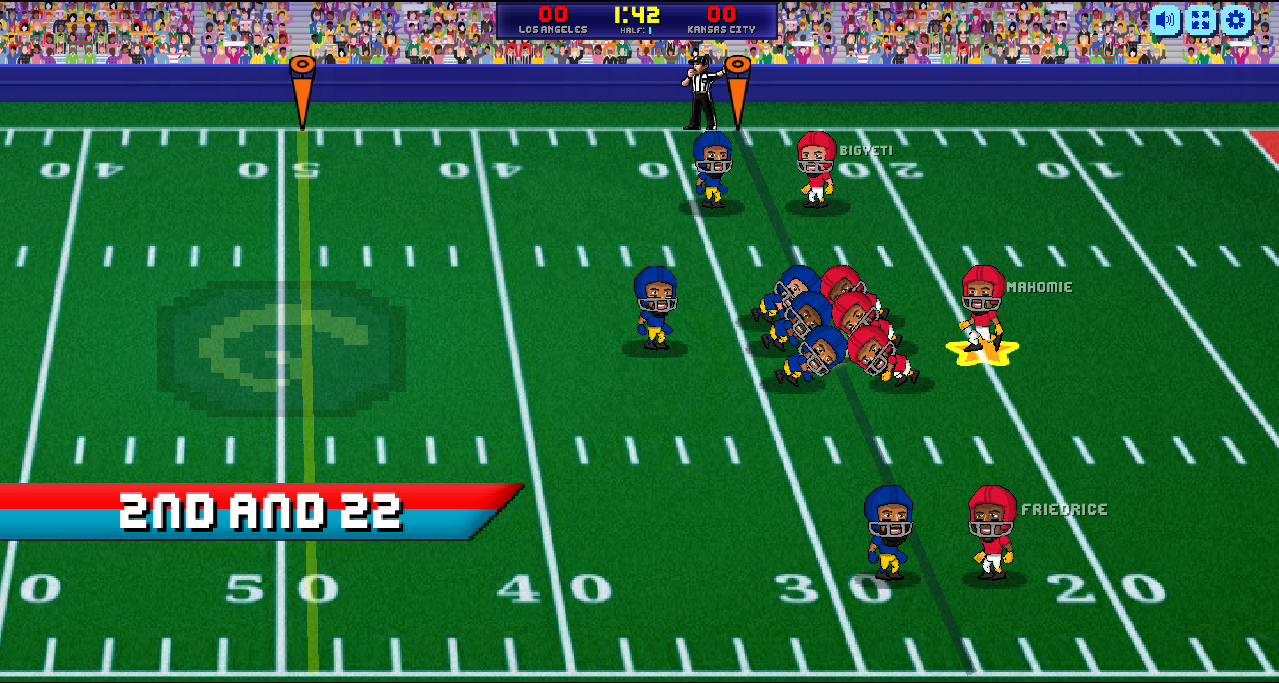
Math Bros looks like the sort of game a teacher might recommend five minutes before the class groans in unison. It has math in the title, after all, and there’s no hiding what you’ll be doing. You’re going to solve problems. The clever part is that Math Bros doesn’t leave those problems floating on an empty screen. It drops them into an arcade-style American football match where every correct answer helps your team make progress.
Basically, you’re doing arithmetic with an end zone waiting at the other side.
I like that setup because it gives simple calculations a reason to matter. A multiplication problem isn’t just another box to complete. It stands between your team and its next successful play. Answer correctly and the drive continues; make a mistake and you may lose the opportunity. That immediate consequence creates just enough tension to keep the experience interesting without turning it into a stressful examination.
Math Bros runs directly in a browser, so getting started is easy. You select a team, use the arrow keys to navigate, and press the space bar to confirm your choices. The official game page recommends Chrome for the most reliable experience, though the game may work in other modern browsers as well. There’s no need to spend twenty minutes adjusting settings before you understand what’s happening.
That accessibility makes Math Bros a good choice for younger players, but I wouldn’t say it is only for children. Adults get rusty too. Ask someone to calculate a tip at a restaurant and watch how quickly a confident person begins staring into the distance. We use calculators for almost everything now, so a fast mental-math game can reveal how much speed we’ve quietly lost.
Why the Football Idea Works
Football and mathematics have more in common than they first appear to. Both involve reading a situation, making a decision, and dealing with the result. Math Bros keeps the sports strategy fairly light, but choosing an offensive play makes the equations feel connected to an actual match.
I wouldn’t come here expecting a detailed football simulation. You won’t be managing an enormous professional roster or studying a complicated playbook. The game uses football as a framework for the math, and that’s the right choice. If the sports systems became too demanding, they would distract from the quick calculations at the center of the experience.
The visual action also breaks up the questions. Solve a problem, see the play unfold, and prepare for the next situation. That cycle gives your brain a brief reset between calculations. It feels more lively than working through a traditional list, even though the educational goal is similar.
The competitive side makes an even bigger difference. In multiplayer, another person’s score or performance adds pressure that a worksheet simply cannot create. You start noticing how long they take to answer and whether they struggle with certain kinds of problems. Then, naturally, you begin trying to answer a little faster.
That can be motivating, but it can also lead to careless mistakes. I learned this lesson early in school: being the first person to raise your hand is only impressive if your answer is correct. Math Bros follows the same rule.
Advice for New Players
If you’re playing for the first time, begin with a difficulty level that feels manageable. There’s no prize for choosing the hardest option and immediately getting stuck. A comfortable starting level lets you learn the game’s pace while building confidence.
Take an extra second to read the entire problem. Players often see two familiar numbers and begin calculating before they’ve checked the operation. Addition and multiplication can produce very different afternoons.
You should also use simple shortcuts. When multiplying by five, for instance, you can multiply by ten and divide the result in half. When adding 29, add 30 and subtract one. These little methods aren’t cheating; they’re how strong mental calculation works. You stop treating every equation as a brand-new puzzle and start recognizing useful patterns.
If a problem feels overwhelming, divide it into steps. Let’s look at 14 × 7. You can calculate 10 × 7, then 4 × 7, and add the two results. That gives you 70 plus 28, or 98. Once you’ve used that method a few times, the answer starts arriving much faster.
Most importantly, don’t let one wrong response wreck the rest of the match. You will make mistakes. Everyone does. Take a breath, check what went wrong, and approach the next question normally. Frustration has a nasty habit of turning one mistake into three.
How Regular Players Can Improve
Returning players should stop measuring progress only through wins and losses. A victory against an inexperienced opponent doesn’t necessarily mean your math is improving. Instead, look at your consistency. Are you answering accurately at a faster pace? Which operations still slow you down? Do you make more mistakes when the score is close?
You can create small personal challenges to keep the game fresh. Try completing a match without guessing. Move to a higher difficulty and focus on accuracy rather than speed. If you usually play alone, invite someone else and see how pressure changes your decision-making.
Honestly, multiplayer reveals habits you may not notice during solo play. Some players become reckless when they fall behind. Others freeze when an opponent answers quickly. If you can maintain the same calculation process regardless of the score, you’ll become much harder to beat.
Hints and skips are available when a question becomes a serious obstacle. They’re useful tools, particularly for beginners, but experienced players should use them carefully. If you skip every uncomfortable calculation, you’ll keep avoiding the exact problems that need practice. Try the question first, even if your attempt isn’t perfect.
Where Math Bros Falls Short
The game’s straightforward design is both its strength and its main limitation. The basic loop can feel repetitive during a long session: solve, watch the football play, and repeat. Players hoping for detailed explanations or step-by-step lessons may also want more instructional support. Math Bros tests and practices arithmetic more effectively than it teaches completely new ideas.
The football presentation won’t satisfy players looking for a deep sports-management experience either. Your calculations drive the action, but the game remains focused on quick arcade entertainment. I’m fine with that, although a wider variety of events, challenges, and progression rewards could make long-term play more compelling.
Browser performance can vary as well. If the game does not load correctly, checking your connection, disabling an overly aggressive blocker, or trying a supported browser may solve the problem.
Is Math Bros Worth Playing?
Yes, especially if you want short practice sessions that don’t feel like traditional homework. Math Bros understands that repetition becomes easier when players receive an immediate reward, and watching a football drive continue is more satisfying than seeing a plain green checkmark.
Parents and teachers may find it useful as an extra practice activity, while students can treat it as a competitive break from ordinary exercises. Adults who enjoy brain-training games will probably get something from it too, even if that something is the uncomfortable discovery that their twelve-year-old cousin can multiply faster than they can.
Math Bros doesn’t disguise arithmetic so thoroughly that you forget you’re learning. I actually respect that. It simply gives the numbers better pacing, a little personality, and a reason to care about the next answer.
Anyway, if practicing math can end with a touchdown and a rematch, I’ll take that over another page of questions.